
Never in my wildest dreams did I think I could grow bananas in New México. Then I found out about three varieties of bananas with varying degrees of winter hardiness that are supposed to be hardy my Zone 7b climate.
Let’s begin with the hardiest of the three, the Japanese fiber banana (Musa basjoo). The name is misleading as it was once thought to be from Japan where it was first described in cultivation; however, it is now known to have originated in Sichuan province of China. It is widely cultivated in both of these countries as well as in Europe, the United States, and even Canada as an ornamental. In Japan, it is used for fiber as its name implies. The fruits are edible and are eaten in Japan as delicacies as dessert bananas when very ripe. Japanese fiber bananas are considered the hardiest of the bananas being able to withstand temperatures well below zero Fahrenheit. It is reportedly hardy in USDA Hardiness Zone 5b to 6a with adequate winter protection (mulching) and from Zones 7 to 9 unprotected.
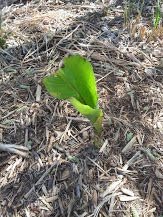
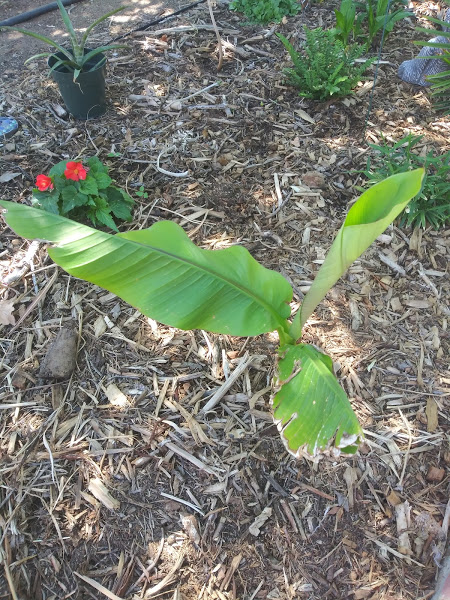
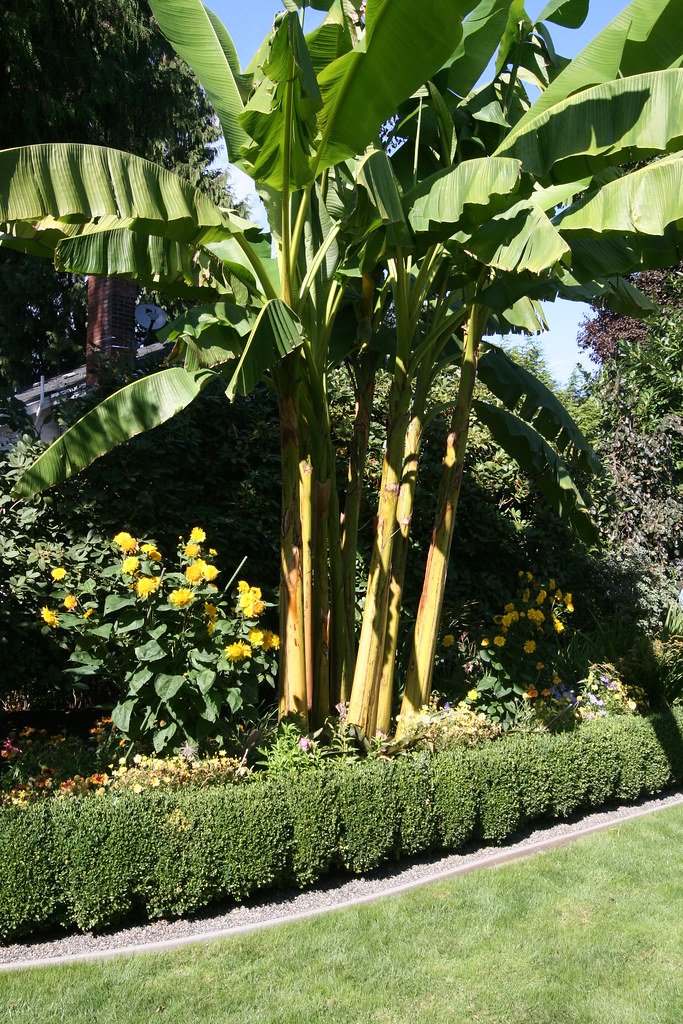
The first photo above of the Japanese Fiber Banana was taken on April 13, 2021 and the second was taken on May 13th. It is growing faster than my other bananas, probably because it is used to growing in a cooler climate. The picture on the right (not my photo) is a mature banana, which as you can see gets quite tall.
The pink banana (Musa velutina) is native to the Indian state of Assam and the eastern Himalayas. The plants are relatively small for a banana plant and flower and fruit within a year, which is relatively quick for a banana. The 3 inch (8 cm) long fruit is bright pink and peels back when ripe. Although the fruit is sweet and edible, it is full of hard seeds that can chip a tooth so care must be taken when eating it. It is reportedly hardy in USDA Hardiness Zones 7 and above.
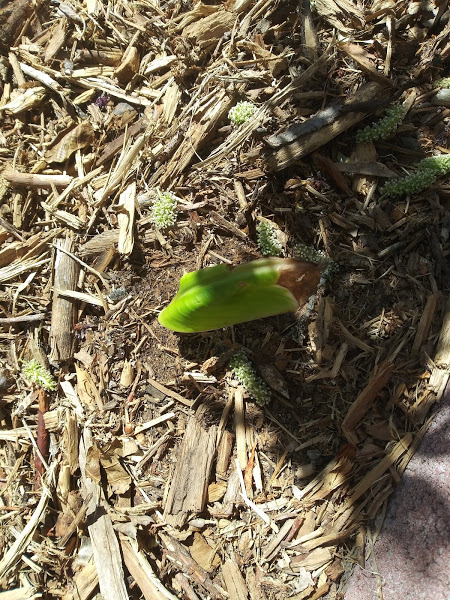
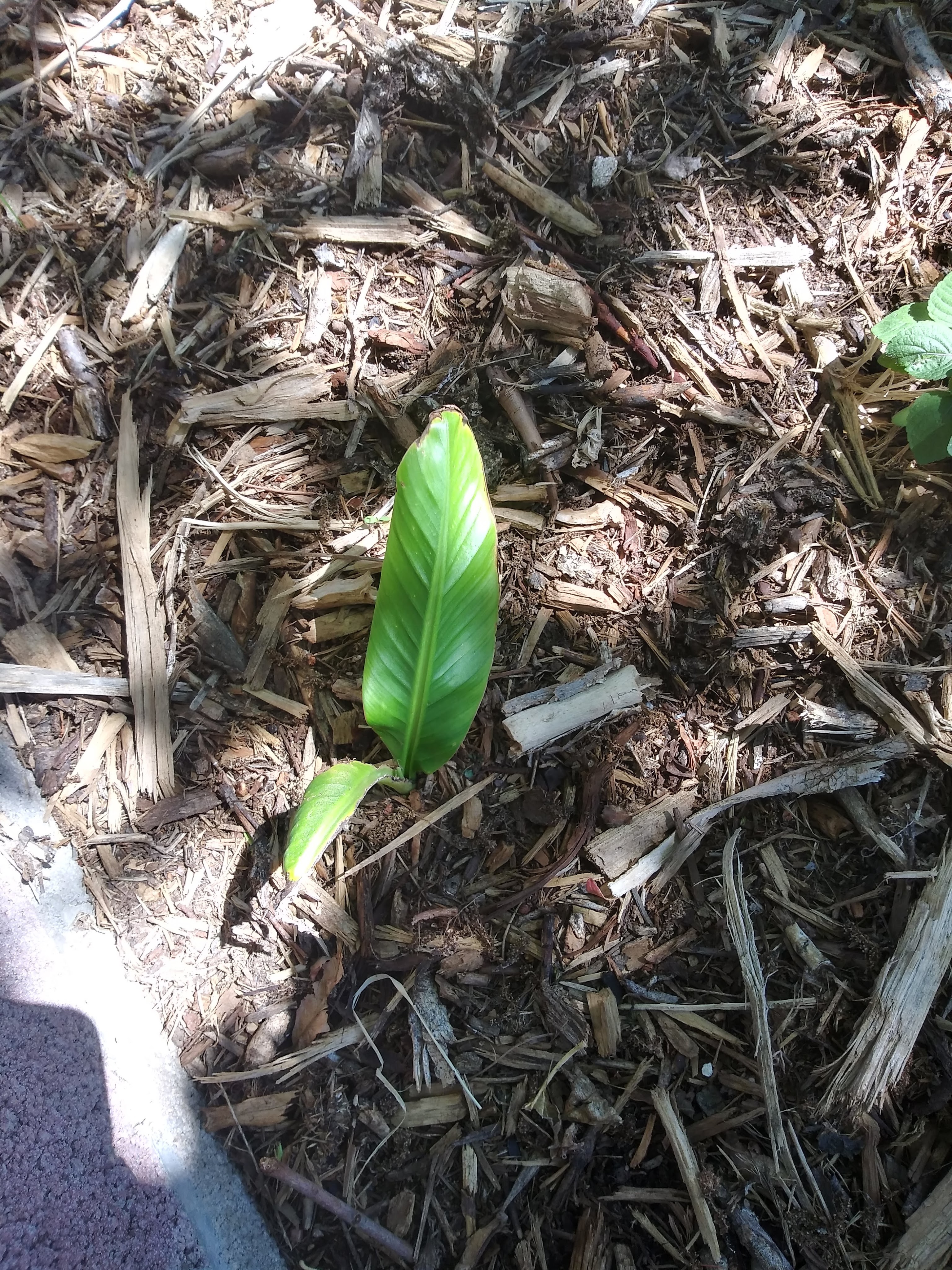
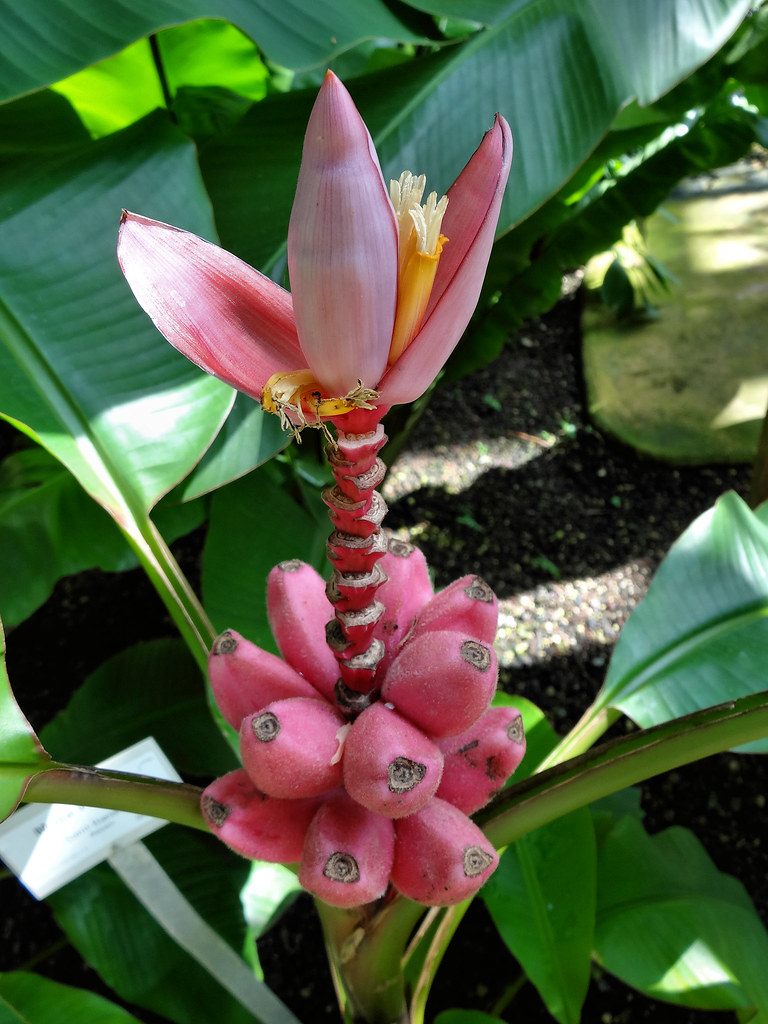
The first photo above of the Pink Banana was taken on April 13, 2021 and the second was taken on May 13th. There hasn’t been much growth although another leaf grew in the meantime. It has been slow growing, probably due to the cool spring weather. The picture on the right (not my photo) is a mature banana with the pink fruit that gives this banana it’s name.
Another banana, the Chinese yellow banana or golden lotus banana (Musella lasiocarpa) is the sole species in the genus, Musella. It is a close relative of the true bananas. It grows high in the mountains of the Yunnan Province in China. The large yellow flower is said to resemble a lotus flower, hence its common name. The plant is grown as an ornamental as its small size (3-5’) and tropical look make it a favorite ornamental. The flowers last for several months and are followed by small, inedible bananas. Chinese yellow banana is hardy in USDA Hardiness Zones 7 and above, and possibly Zone 6 with adequate protection.
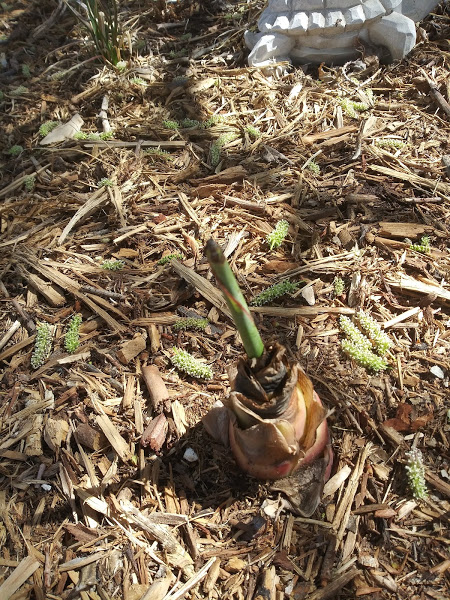
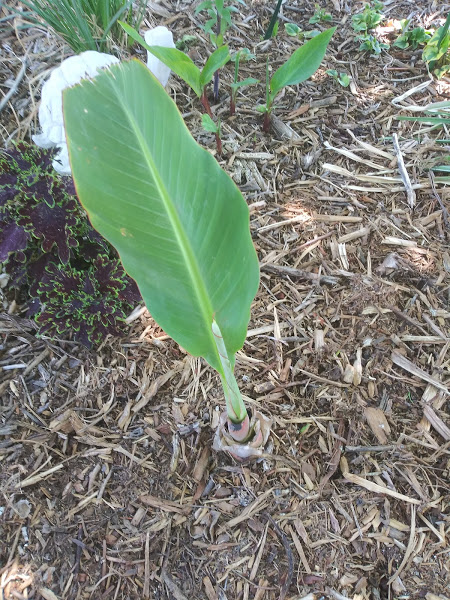
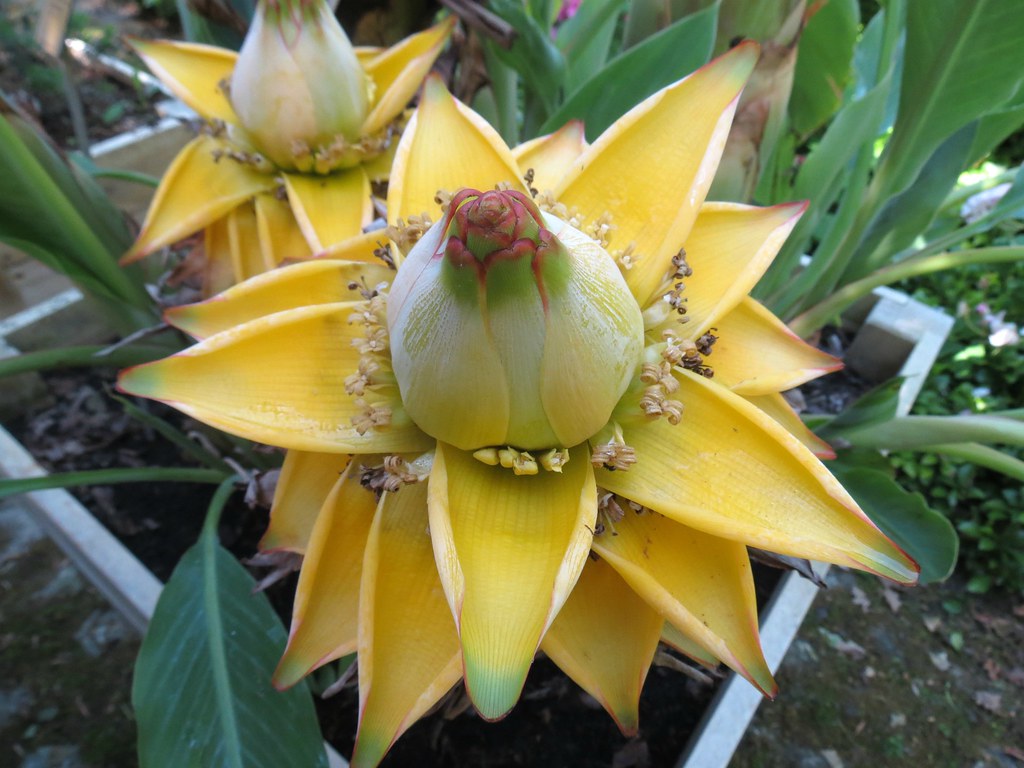
The first photo above of the Chinese Yellow Banana was taken on April 13, 2021 and the second was taken on May 13th. It has been slow growing, probably due to the cool spring weather; however, it does seem to be growing faster now that the weather has warmed up. The picture on the right (not my photo) is a mature banana with the yellow flower that gives this banana it’s name.
While all three bananas can be grown as container plants in any zone, I’m going to talk about my experience here in New México in Zone 7. Bananas grow from a rhizome called a corm. As long as it is protected from freezing, it will resprout in the spring when temperatures warm up. Often called banana trees, bananas are actually an herbaceous perennial that grows a pseudostem, which grows larger as the leaves emerge from its center at the top.
We had a cool spring and my plants are slowly coming out of dormancy. I was very happy to see that all three species of bananas made it through this past winter (2020-2021). Our lowest temperature was one night that went down to 9 or 10 degrees Fahrenheit (12 degrees Celsius), which is on the border of Zones 7b and 8a. To bring them through the coldest weather, I covered the bananas with a thick layer of bark mulch. I made the mistake of cutting all of my bananas down to 4 inches after our first hard frost last fall. I misread an article that said to cut them down to 3 to 4 feet. I thought it said 3 to 4 inches. Luckily all survived, but I wonder if they would be further ahead if I hadn’t cut them so drastically. This fall, I will only cut the pseudostem back to 3 or 4 feet, build a wire cage around it and fill it with dried leaves to protect it from freezing. I also need to do this as I want to see if I can get any of them to flower and fruit. It can take up to 18 months for bananas to produce fruit. If I am successful with protecting them from the cold, maybe I’ll have some fruits next summer.
Bananas need good soil, partial to full sunlight, moist soil, and lots of fertilizer. I’m lucky to be blessed with shade and good soil that holds moisture. I am going to be fertilizing the bananas throughout the growing season. One of the best fertilizers is bananas themselves. As you may know, bananas are high in potassium. They also need potassium to grow. After you have finished eating a banana, don’t throw the skin away. Instead bury it at the base of your bananas or other plants, which will also benefit from the added potassium. You can dry the skins, grind them in a coffee grinder or a mortar and pestle and add it to the soil or make compost tea and water it in. Bury overripe bananas in the soil.
Add the tropical look of bananas to your garden. I’ll be posting updates throughout the summer as I continue to experiment with bananas and other exotic plants. In the meantime, you can check out my YouTube channel, Ted’s Universe, for updates on the bananas and my “tropical” landscape. Happy Gardening!
 Ted’s Universe: Travel, Art, Nature