Growing Ferns in a Tropical Style Garden

My garden has lots of shade due to two very old, large mulberry trees whose canopies have grown together. With a rich soil, a heavy layer of mulch, and good moisture retention, I have been able to grow many plants that I wouldn’t be able to grow otherwise in our arid climate. 

In previous blogs, I wrote about my tropical looking garden.This year I decided to try growing several different kinds of ferns, which are common plants in tropical gardens.  I have never grown ferns before, so I have no idea how they will do in our summer heat. Our temperatures are over 90 degrees Fahrenheit almost every day from June into mid-September with low humidity. We had 4 days over 100 degrees already in June; however, now as I write this we have just had some of the coolest high temperatures on record due to a couple days of steady rain. This is very unusual for us but the ferns and other plants are loving the change.

I planted the first fern, a Japanese tassel fern (Polystichum polyblepharum), in March, 2021. It is still somewhat small but it has been putting out new fronds and appears to be doing fine. I planted a larger one in May. A friend said it looked Jurassic with its upright appearance and brown, fuzzy stems. Japanese tassel fern is evergreen with shiny, dark green fronds that can grow up to two feet long in a vase-shaped clump. It is native to Japan and southern Korea. It gets its name from the tassels that form on the ends of emerging fronds. The tassels disappear as the fronds open up. Japanese tassel fern is hardy in USDA Hardiness Zones 6 to 8.
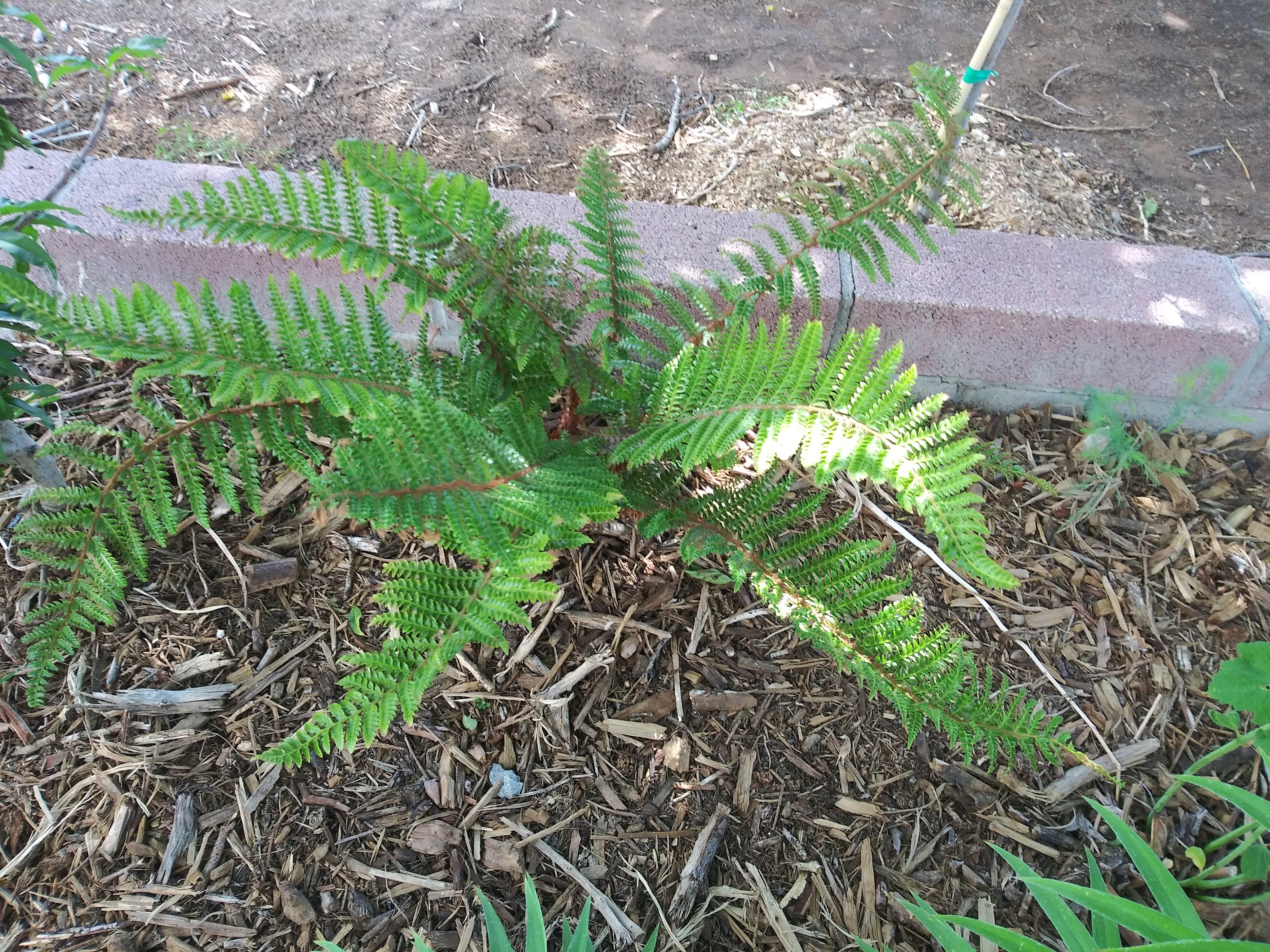
Japanese Tassel Fern

The next ferns I planted were a western sword fern (Polystichum munitum) and a holly fern (Cyrtomium falcatum). Western sword fern is also known as sword holly fern, giant holly fern, Christmas fern, Pineland sword fern, and Chamisso’s shield fern. It is native along the Pacific Coast from southeast Alaska south to central California with some disjunct populations in the northwestern states. It is found in moist forests but it can also take somewhat dry conditions. The large, erect leaves grow up to 4.5 feet long. Western sword fern is hardy in USDA Hardiness Zones 5 to 9.

Western Sword Fern

While the rest of the ferns I planted have a traditional fern look about them, the holly fern looks quite different. The leaves are serrated with sharp tips, looking similar to holly leaves. Holly fern can grow in deep shade to dappled sun-light. I like the foliage as it reminds of some of the more tropical ferns that I have seen. It can get up to 2 feet high and 3 feet wide. It is also known as the Japanese holly fern. Holly fern is hardy in USDA Hardiness Zones 6 to 10. It is evergreen in mild climates. I’ll be interested to see what it does in my Zone 7 garden.

Holly Fern

This spring, I bought a bag with two Tennessee ostrich fern (Homalosorus pycnocarpos, syn. Diplazium pycnocarpon), also called Tennessee glade fern, from Walmart. The roots were in a plastic bag and very dry. They looked dead. I planted them in potting soil in a one gallon container. I waited and waited and nothing. It took almost two months but finally one sprouted. After growing it for a while and I thought it was big enough, I planted it outside. In a few weeks, the other root finally emerged. They have been outside for about two months now and while still small they are growing. Tennessee ostrich fern is native to the east coast of North America from southern Canada to the Gulf of México.  Tennessee ostrich fern is a tall plant with featherlike fronds and spreads by creeping rhizomes that form large colonies. The fronds can reach up to 3 feet long and form clumps up to a foot and a half wide per plant. They seem to be slow growing but maybe it takes them time to get established. Reportedly, it can withstand some dry conditions once it is established. Tennessee ostrich fern is hardy in USDA Hardiness Zones 3 to 8.
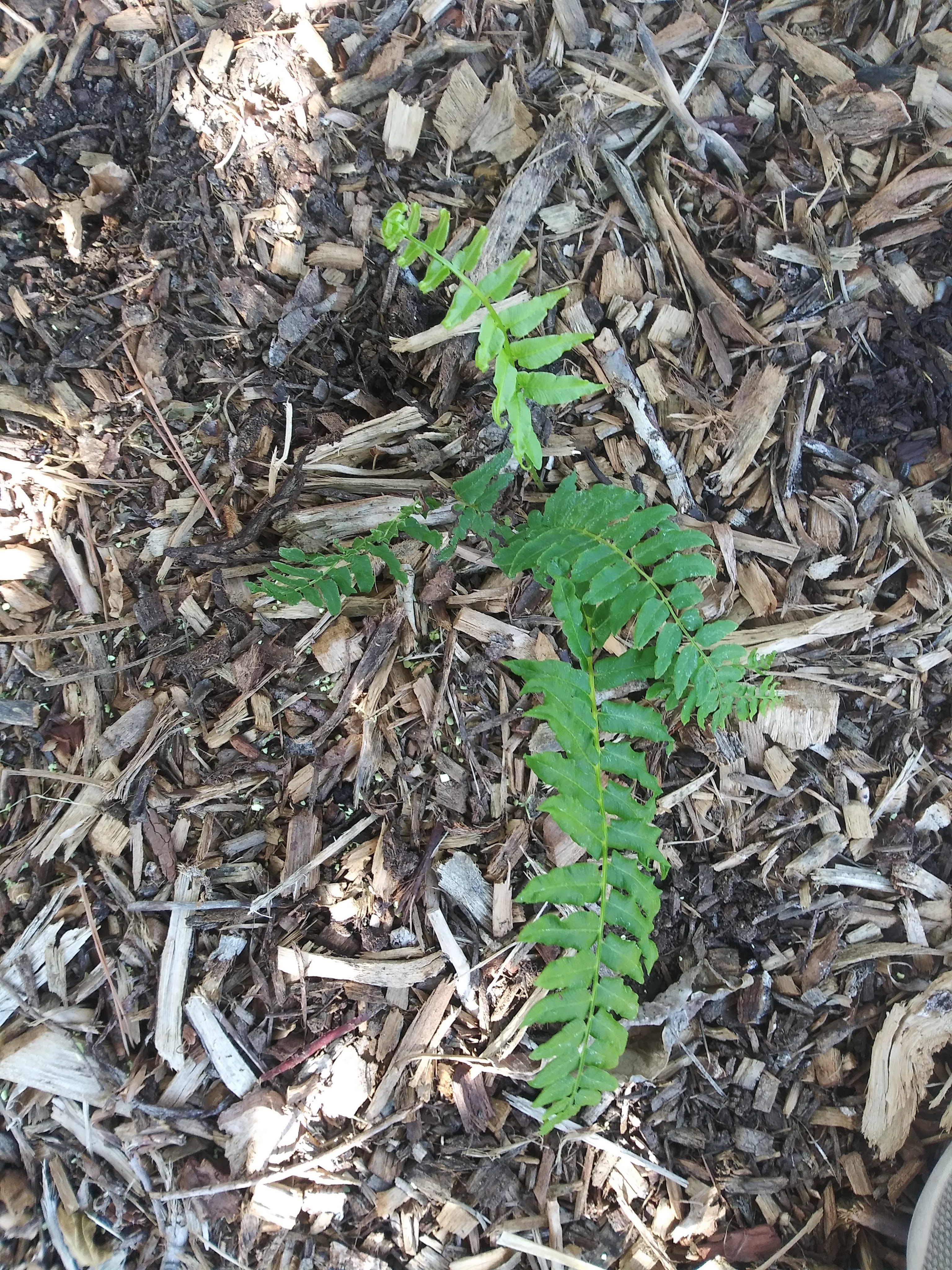
Tennessee Ostrich Fern

The next fern I purchased is the southern wood fern (Dryopteris ludoviciana). It is native to woodland areas from North Carolina to Florida and west to Texas. I planted it this spring and it has been growing slowly but looks very healthy. It has light green, upright fronds that spread by rhizomes to form dense colonies in wet or dry shade. The fronds grow up to 4 feet long and the plants up to 3 feet wide. Southern wood fern is evergreen in mild climates and deciduous in cooler climates. Southern wood fern is hardy in USDA Hardiness Zones 6 to 10.

Southern Wood Fern

Last, but certainly not least is the Indian holly fern (Arachniodes simplicior ‘Variegata’). I fell in love with this fern at first sight at a local store. It was different from any fern I had seen before. The bright, green fronds have a gold stripe down the midrib of each leaflet. It’s unusual to see other colors besides green in ferns. As with other ferns, Indian holly fern spreads by creeping rhizomes. Monrovia (nursery) calls it, “An excellent fern for woodland colonies and subtropical compositions.” Since I’m into tropical style gardening in a subtropical climate, this fern looks just perfect. Indian holly fern grows to a height of one and a half feet and up 3 feet wide. It is native to India, China, and Japan. Indian holly fern is hardy in USDA Hardiness Zones 7 to 10.
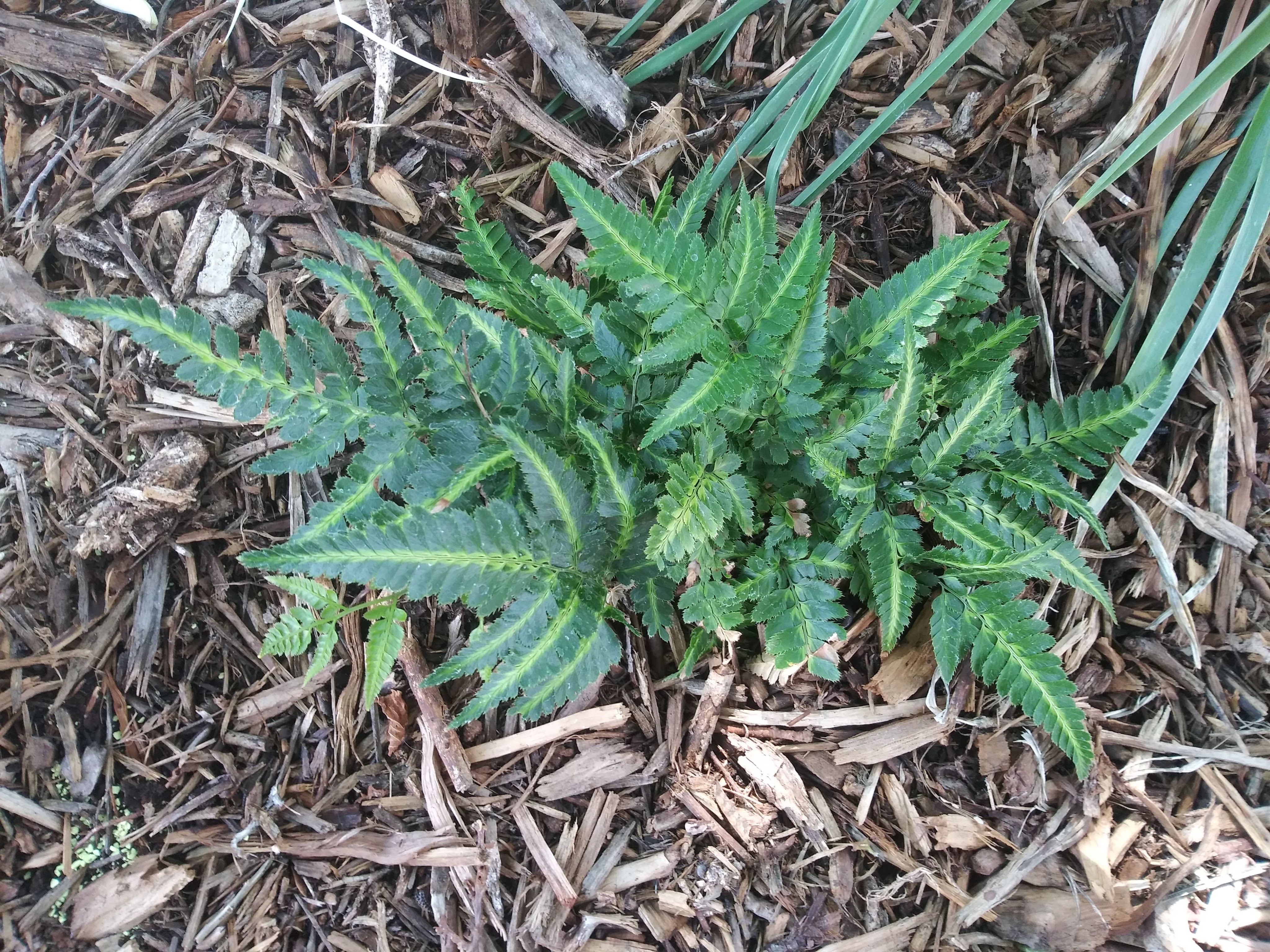
Indian Holly Fern

Despite the heat earlier, the ferns all seem to be doing well. They are growing and show no signs of stress. My biggest concern is our soil and city water, both of which are alkaline. I do top dress the beds with horticultural sulfur and cover it with a mulch of wood chips, both of which help to increase the acidity of the soil. The biggest factor that is helping to grow them is the shade from the trees as mentioned before. 

I will be observing the different species throughout the growing season and next winter to see which of the ferns survive in our desert climate. Ferns really add that extra touch to a tropical style garden.
Growing Bananas in the New Mexico Desert!

Never in my wildest dreams did I think I could grow bananas in New México. Then I found out about three varieties of bananas with varying degrees of winter hardiness that are supposed to be hardy my Zone 7b climate.

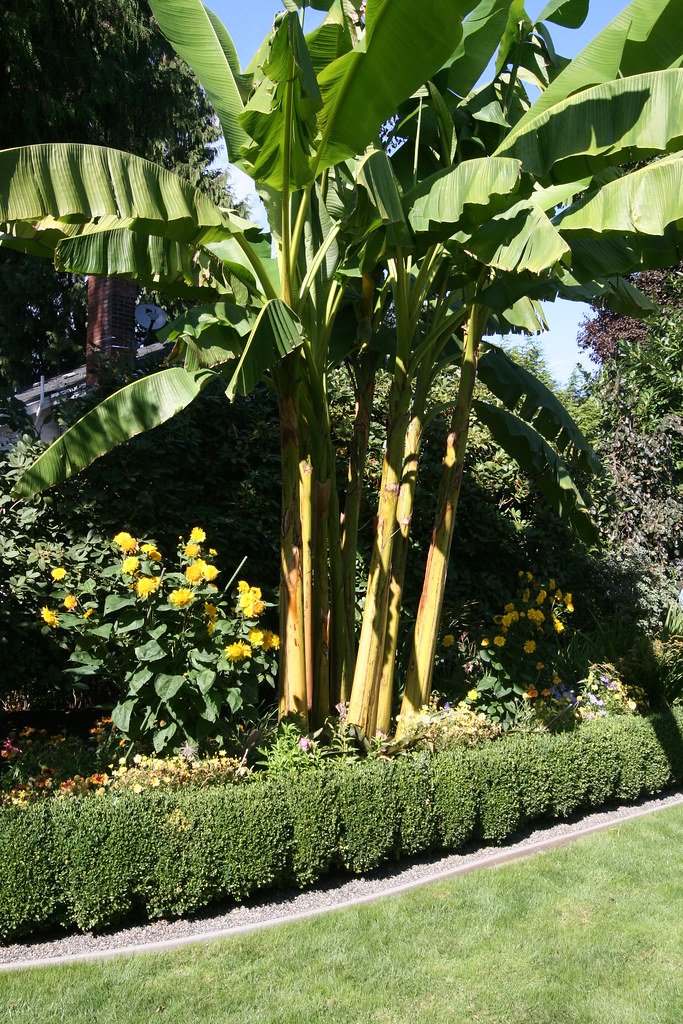
Let’s begin with the hardiest of the three, the Japanese fiber banana (Musa basjoo). The name is misleading as it was once thought to be from Japan where it was first described in cultivation; however, it is now known to have originated in Sichuan province of China. It is widely cultivated in both of these countries as well as in Europe, the United States, and even Canada as an ornamental. In Japan, it is used for fiber as its name implies. The fruits are edible and are eaten in Japan as delicacies as dessert bananas when very ripe. Japanese fiber bananas are considered the hardiest of the bananas being able to withstand temperatures well below zero Fahrenheit. It is reportedly hardy in USDA Hardiness Zone 5b to 6a with adequate winter protection (mulching) and from Zones 7 to 9 unprotected.

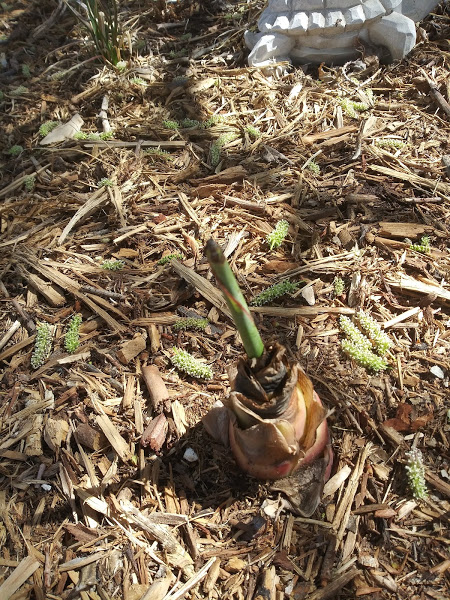
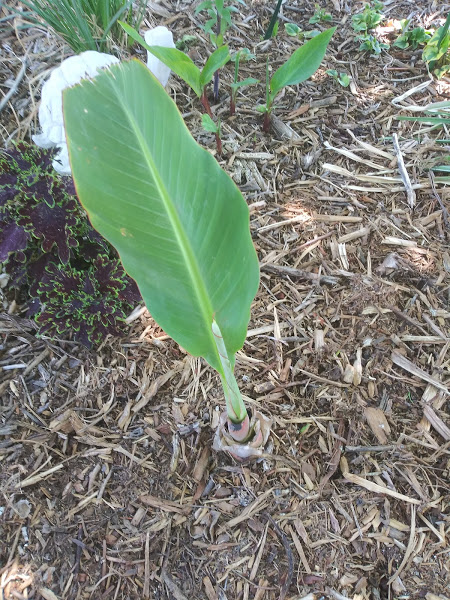
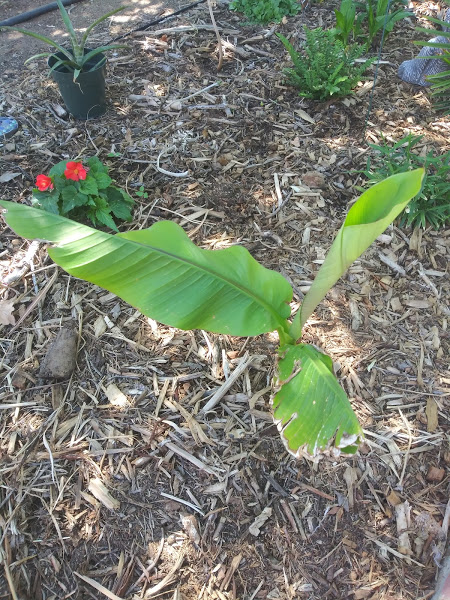
The first photo above of the Japanese Fiber Banana was taken on April 13, 2021 and the second was taken on May 13th. It is growing faster than my other bananas, probably because it is used to growing in a cooler climate. The picture on the right (not my photo) is a mature banana, which as you can see gets quite tall.

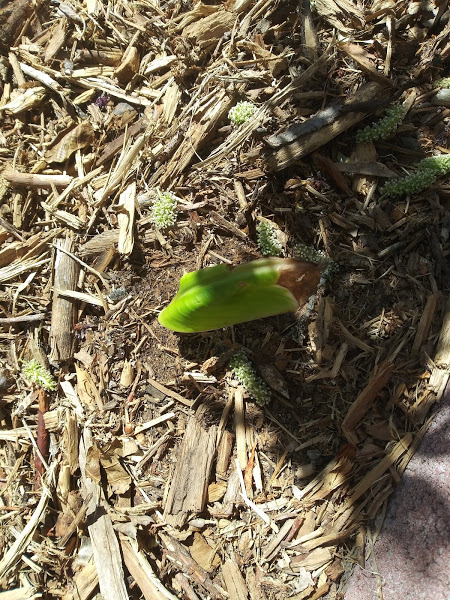
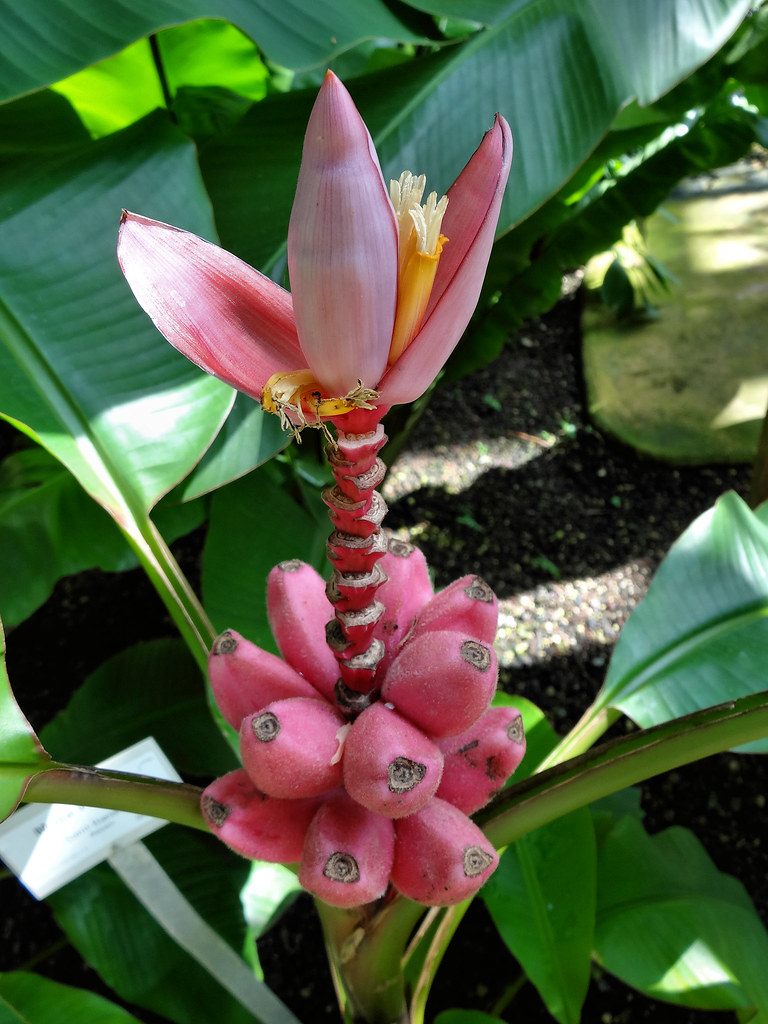
The pink banana (Musa velutina) is native to the Indian state of Assam and the eastern Himalayas. The plants are relatively small for a banana plant and flower and fruit within a year, which is relatively quick for a banana. The 3 inch (8 cm) long fruit is bright pink and peels back when ripe. Although the fruit is sweet and edible, it is full of hard seeds that can chip a tooth so care must be taken when eating it. It is reportedly hardy in USDA Hardiness Zones 7 and above. 

The first photo above of the Pink Banana was taken on April 13, 2021 and the second was taken on May 13th. There hasn’t been much growth although another leaf grew in the meantime. It has been slow growing, probably due to the cool spring weather. The picture on the right (not my photo) is a mature banana with the pink fruit that gives this banana it’s name.

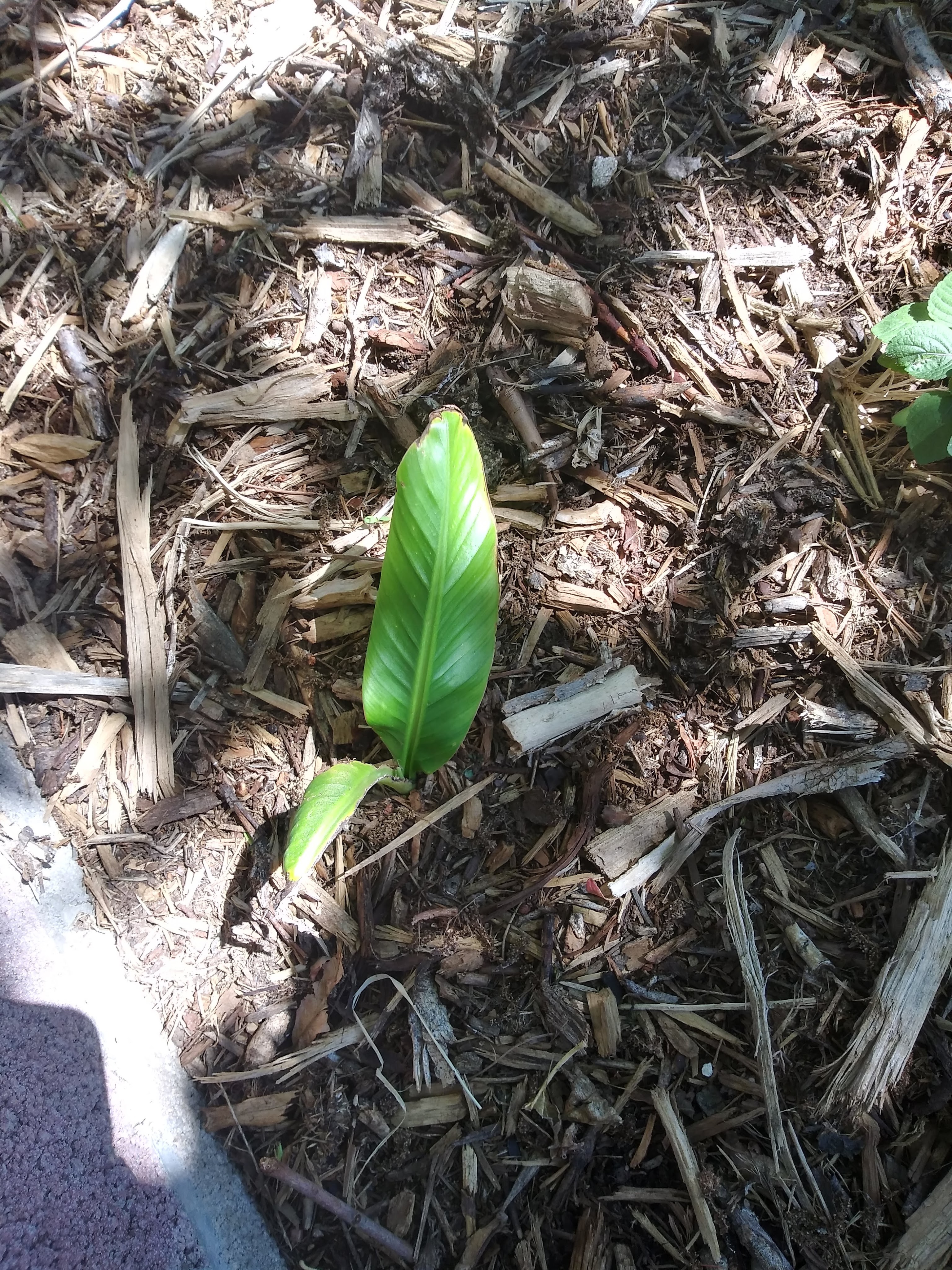
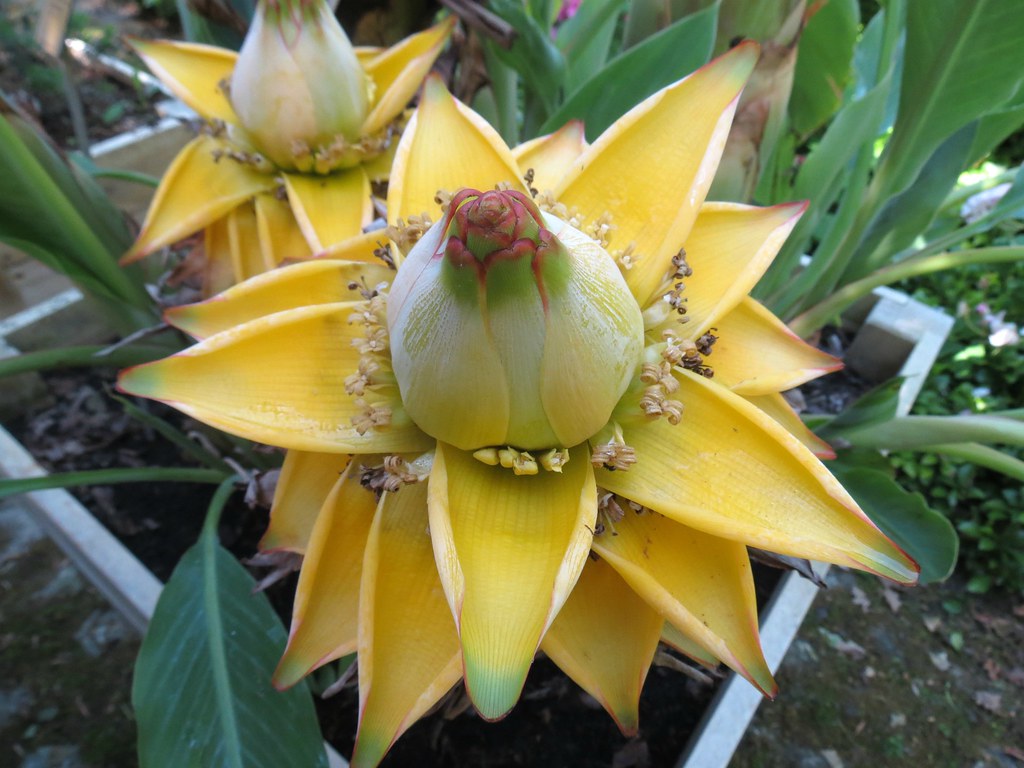
Another banana, the Chinese yellow banana or golden lotus banana (Musella lasiocarpa) is the sole species in the genus, Musella. It is a close relative of the true bananas. It grows high in the mountains of the Yunnan Province in China. The large yellow flower is said to resemble a lotus flower, hence its common name. The plant is grown as an ornamental as its small size (3-5’) and tropical look make it a favorite ornamental. The flowers last for several months and are followed by small, inedible bananas. Chinese yellow banana is hardy in USDA Hardiness Zones 7 and above, and possibly Zone 6 with adequate protection.

The first photo above of the Chinese Yellow Banana was taken on April 13, 2021 and the second was taken on May 13th. It has been slow growing, probably due to the cool spring weather; however, it does seem to be growing faster now that the weather has warmed up. The picture on the right (not my photo) is a mature banana with the yellow flower that gives this banana it’s name.

While all three bananas can be grown as container plants in any zone, I’m going to talk about my experience here in New México in Zone 7.  Bananas grow from a rhizome called a corm. As long as it is protected from freezing, it will resprout in the spring when temperatures warm up. Often called banana trees, bananas are actually an herbaceous perennial that grows a pseudostem, which grows larger as the leaves emerge from its center at the top. 

We had a cool spring and my plants are slowly coming out of dormancy.  I was very happy to see that all three species of bananas made it through this past winter (2020-2021). Our lowest temperature was one night that went down to 9 or 10 degrees Fahrenheit (12 degrees Celsius), which is on the border of Zones 7b and 8a. To bring them through the coldest weather, I covered the bananas with a thick layer of bark mulch. I made the mistake of cutting all of my bananas down to 4 inches after our first hard frost last fall. I misread an article that said to cut them down to 3 to 4 feet. I thought it said 3 to 4 inches. Luckily all survived, but I wonder if they would be further ahead if I hadn’t cut them so drastically. This fall, I will only cut the pseudostem back to 3 or 4 feet, build a wire cage around it and fill it with dried leaves to protect it from freezing. I also need to do this as I want to see if I can get any of them to flower and fruit. It can take up to 18 months for bananas to produce fruit. If I am successful with protecting them from the cold, maybe I’ll have some fruits next summer. 

Bananas need good soil, partial to full sunlight, moist soil, and lots of fertilizer. I’m lucky to be blessed with shade and good soil that holds moisture. I am going to be fertilizing the bananas throughout the growing season. One of the best fertilizers is bananas themselves. As you may know, bananas are high in potassium. They also need potassium to grow. After you have finished eating a banana, don’t throw the skin away. Instead bury it at the base of your bananas or other plants, which will also benefit from the added potassium. You can dry the skins, grind them in a coffee grinder or a mortar and pestle and add it to the soil or make compost tea and water it in. Bury overripe bananas in the soil. 

Add the tropical look of bananas to your garden. I’ll be posting updates throughout the summer as I continue to experiment with bananas and other exotic plants. In the meantime, you can check out my YouTube channel, Ted’s Universe, for updates on the bananas and my “tropical” landscape. Happy Gardening!


Winter Sowing

When Covid-19 kept us home for most of the time this past year (and it appears it will for some time this year), many of us turned to our gardens to get outside of the house. A friend of mine recently suggested I try winter sowing.

While I am familiar with cold stratifying seeds, winter sowing is a new concept for me. So, what is winter sowing? It’s a method of starting seeds outdoors in winter that uses plastic jugs and other containers as little greenhouses. Usually, it is done for perennials, shrubs, and trees that need a period of cold stratification; however, this method can also be used for almost any plant that is hardy in your climate other than tropicals. It is also suited for vegetables, especially those cool season ones such as members of the onion and cabbage families. You are working with nature for the right temperatures and time for germination of the seeds. 

The advantages of winter sowing include the ease of doing it, no need for a greenhouse or cold frame, no need to take up indoor space, no need for grow lights to keep plants from getting spindly indoors, the seedlings will naturally be hardened off, the seeds and seedlings won’t be eaten by animals, it is easy to keep the seeds moist, and best of all it gives you something to do in the winter. While you can do this almost any time during the winter, it is best in most climates to wait to do so shortly after the winter solstice to give those seeds that need cold stratified enough of a cold period to break the seed dormancy. There is still enough time to do this now in most climates.

While almost any translucent or transparent container will work, plastic, one-gallon milk or water jugs are the most popularly used containers for winter sowing. You just cut the jug in half, allowing for at least 4 inches on the bottom half to hold enough soil for starting the seedlings. I cut mine with scissors after using a paring knife to make a slit to start the cut. Pierce the bottom of the jugs to make holes for drainage. Then I filled the jug with a pro-mix seed starting potting soil (most any seed starting mix will do), planted my seed, watered everything well, and taped the top of the jug to the bottom using transparent packing tape. The next thing I did was to label the jugs. Leave the lids off for air circulation and for watering. I used Artline Garden Markers to label the jugs with the name of the plant, the date sown, and the seed source on some. In addition to winter sowing, you can use this method to start annuals and other tender plants such as tomatoes and peppers later in the spring.

My first sowing was on January 16th. The bunching onions and Chinese chives have already germinated as of February 3rd. This is my first time doing this so we will see what happens.

If you want further information on winter sowing, do an Internet search for winter sowing. There is lots of information out there. Spring is just around the corner. It’s time to get going. What are your gardening plans for the upcoming year?

Travel Tip: Sink Plug and Wash Cloth

Like many of you, I am suffering from Covid fatigue and can’t wait to travel again. In the meantime, we can dream of far away places and prepare for the day again when we can go again. Making some small purchases now can help make your trip more comfortable in the future.

When I travel to places like Guatemala and the Philippines, I often stay in small hotels or bed and breakfast accommodations. I don’t know how true this is in other parts of the world, but one thing I ran into several times is that these places often lack two things: a plug for the sink and washcloths. Even some of the larger resorts and hotels have lacked washcloths. Now I’m sure to take a universal plug and a washcloth wherever I travel. 

A washcloth is pretty self explanatory. Most of us know what they are. 

A universal sink plug or stopper, however, may be unfamiliar to you. I can’t tell you how many times I had to stuff a washcloth (often my own because I said, the hotel didn’t have them) or towel in the sink to wash up and shave. Be sure to buy a flat one as it will fit most sinks and tubs. Here is a picture of one:

A Forest Surprise

While most people know that there is desert in New México, many may be surprised to find that we have many high, forested mountains in our state. One of the special places in the Manzano Mountains near Albuquerque is Fourth of July Canyon. 

What makes this place special and magical is that it is one of the few places in the Southwest that comes ablaze with the fall color of maples in the fall. Bigtooth maples, which are rare in the area, are plentiful here. The bright colors reminded someone of fireworks, hence the name Fourth of July Canyon.

If you are in the area in mid-October (around the 10th most years), it’s about an hour’s drive from Albuquerque to Fourth of July Canyon. Take I-40 east through Tijeras Canyon and exit at Tijeras. Take NM 337 south. When you reach the T intersection of NM 55, take a right, which takes you west and into the small town of Tajique. Once you’ve gone through Tajique, look for a sign for FS 55, a forest service road to the Canyon.

Here are some pictures of the colors in October 2020:

A Bit of the Tropics in New Mexico

I love the tropics. Central America and Southeast Asia are my favorite areas to travel. Since I don’t live there, I wanted to create a taste of the tropics here at my home. I began researching what plants would grow in my climate zone and found there were quite a few that can survive our winter temperatures.

While each region of the country has unique growing conditions, New México presents some special challenges. Most people assume we are hot and dry, which is true for much of the year. However, we can get quite cold during the winter especially at night during the winter months of December and January. New México ranges from warm desert at the lowest point, 2,844 ft, in the Chihuahuan Desert near Carlsbad to cold alpine tundra at the highest point, 13,167 ft., on Wheeler Peak creating a wide variation in climate in the state.  

My garden is located in a fairly warm location in the center of Albuquerque and is somewhere between USDA Plant Hardiness Zones 7b and 8a. What this means is that our lowest temperatures are usually between 5 and 15 degrees F. during the winter.  The Köppen Climate Classification subtype for this climate is “BSk”. (Tropical and Subtropical Steppe Climate). So while we do have cold temperatures and some snow most years, we are still a much milder climate than found in the northern states. 

The main challenge is aridity. Our humidity is extremely low, even into the single digits at times. The air is not only dry but our soils are low in organic matter. I am lucky in that the soil in my backyard is in very good condition. It is loamy with very little clay or sand and drains well. I didn’t have to do any soil prep as a result. 

Our desert sun can fry plants in no time. We have to question full sun on labels when we plant as often they cannot take full sun in New México. The area I chose to plant my subtropical garden in is shaded by two very large mulberry trees. They provide filtered sun and shade in which the plants have thrived. . 

The filtered shade and good soil help with conserving moisture as these plants like a relatively moist soil at all times. The key to the success of the bed so far has been bark mulch. I put down a heavy layer, 3” to 4” thick to cover the planting area. This helps keep the soil moist by slowing evaporation of the moisture within the bed. I only have to water every few days to keep things moist even in 100 degrees plus F.

I posted a picture in May of the new bed covered with mulch. Here it is again:

And here is the garden in September.

Except for the annuals, the plants I chose should make it through a normal winter in my area. Over the course of the summer I planted the following species:

Indian Hawthorne ‘Eleanor Taber’ (Rhaphiolepis indica)

Hardy Hibiscus (Hibiscus moscheutos) 

Midnight Marvel Hardy Hibiscus (Hibiscus moscheutos ‘Midnight Marvel’)

Trumpet Lily ’Beijing Moon’ (hybrid)

Poco Orange Hot Poker (Kniphofia species)

Chameleon Plant (Houttuynia cordata)

Mexican Petunia (Ruellia brittoniana)

Chinese Yellow Banana (Musella lasiocarpa)

Japanese Banana (Musa basjoo)

Pink Velvet Banana (Musa velutina)

Zebra Grass (Miscanthus sinensis ‘Zebrinus’)

Yellow Monkey Flower (Mimulus quitate)

Mango Popsicle Hot Poker (Kniphofia species)

Banana Popsicle Hot Poker (Kniphofia species)

White-flowered Hot Poker (Kniphofia species)

Chinese Ground Orchid (Bletilla striata)

Peter Pan Agapanthus (Agapanthus africanus ‘Peter Pan”)

Black Magic Elephant Ear (Colocasia esculenta ‘Black Magic’)

Giant Thailand Elephant Ear (Colocasia gigantea)

McCurtain Dwarf Palmetto (Sabal minor ‘McCurtain’)

Windmill Palm (Trachycarpus fortunei)

Necta Zee Miniature Nectarine (Prunus persica)

President Canna (Canna indica ‘President’)

Dwarf Bamboo (Pleioblastus pygmaeus?)

Mangave Hybrid (Mangave hybrid)

Fritillaria imperialis 

Annuals for color

Marigolds 

Vincas

Many of the plants were turned to mush when a record-setting, early season snow occurred in October. Now the garden is asleep and mulched for the winter. It will be interesting to see what survives the winter. 

Travel Tip #1

This morning I was listening to a presentation from an insurance agent in a business meeting. He was saying that they had jewelry insurance, which is especially useful if you travel, and something happens to your expensive watch, such as having it fall overboard into the ocean on a cruise. My first thought was, “Who wears an expensive watch on a vacation?”

When traveling, especially overseas, I think it is a good idea to blend in with the local people as much as possible. I wear clothes that don’t call attention to me, and the last thing I want to do is to wear a flashy, gold watch or other jewelry. As Americans, we will draw attention to ourselves as is by our mannerisms and possibly our clothes. Wearing expensive jewelry will only make you a target for thieves. Not only are you risking being robbed, you also run the risk of being injured or even killed for your jewelry.

Before I leave on a trip, one of the things I do is go to a store such as Walmart and buy a cheap watch that costs me less than $15.00. I just need it to tell the time, not to impress anyone. That way, if I were to be held up, it’s no big deal if it gets stolen. 

I hope you find this helpful. In the future, I plan on adding more travel tips from what I’ve learned from trips to other countries. I’m looking forward to traveling again once the pandemic is over. In the meantime, stay safe, especially if you do get to go somewhere. 

No need to blend in, as we walk down a street in Hội An, Vietnam. Even so, I would avoid wearing flashy jewelry in a place like this, as you may already be a target of thieves who prey on tourists. 

The Ho Chi Minh City Museum of Fine Arts

If you are a fan of art like I am, one of the must-sees on any trip are visits to a country’s art museums and galleries. The Ho Chi Minh City Museum of Fine Arts is the major art museum in the city. The museum consists of three, three-floor buildings that house a collection featuring Vietnamese artworks in sculpture, oil, silk painting and lacquer painting, Vietnamese ceramics, and a collection of ancient Buddhist art. I was fortunate to visit the Museum in August 2019.

The Museum of Fine Arts is housed in a lovely old colonial building complex.The main building was constructed between 1929 and 1934 as a villa for the Hua (Hui-Bon-Hoa) family. The museum was located there in 1987.

The main building is beautiful in itself with colonial style grill work, spiral staircases, and shuttered windows. It houses contemporary exhibits of painting and sculpture that present a good cross-section of Vietnames art from those in a Western style to more traditional Vietnamese styles. In a smaller colonial building next to the main building is a collection of ancient Vietnamese art, mostly pottery and sculpture that I found very interesting and different. 

If you decide to go to the Ho Chi Minh City Museum of Fine Arts, it is in one of the more popular areas of the city. It is very close to the famous Benh Thanh Market and both together can make for an interesting part of your day in the city.

The following is just a small sampling of the many works of art in the Museum. As you can see they range from ancient pieces to contemporary but in a traditional style works, to modern art.

The entrance of the main building


Welcome Spring by Truong Han Minh (1951) in a traditional style
Vietnamese Buffaloes by Quach Phong (1938) in a Modernist style
Yin and Yang by Bui Hai Son (no year on tag)
War and Peace by Le Leon (2009)
Sapa Love Market by Dang Minh The (1970)
In the Street by Nguyen Xuan Vinh (1983)
Father and Child by Phan Gia Huong (1951)
One of three buildings, this one houses ancient art and artifacts.
Statue of an elephant, circa 7th or 8th century
Statue of Buddha, circa 7th or 8th century
Spiral staircase with a large vase
Unicorn, early 20th century
Pair of Fish, early 20th Century
Reclining Buddha, early 20th Century
Statue of Maitreya, 19th Century
Statue of Kwan Yin, 19th Century (She is very popular in Vietnam)

We were lucky to be at the Museum on the day they were having a reception for artists in a contemporary show in the third building of the complex. We got to meet some of the artists and see some of the work going on in current day Vietnam. This was also an art competition as there were awards for some of the works. You will see red bows on some of the winners pictured here.

A beautiful Vietnamese chandelier in the building
Street Full 2 by Tran Viet Ha
Security Department by Ha Phuoc Duy
I didn’t get the name of this painting or artist unfortunately. It was one of my favorites.
Urban by Nguyen Xuan Son
There were beautiful bouquets throughout the exhibit

I’m standing in the doorway ready to leave the Museum after spending a wonderful time viewing a full spectrum of Vietnamese art from ancient times to the current day. I highly recommend a visit if you are ever in Ho Chi Minh City.

Vietnam – First Afternoon in Ho Chi Minh City

We arrived in Ho Chi Minh City (still referred to as Saigon in the city) exhausted and tired but resisted the urge to sleep too long. Just a quick nap to refresh ourselves before heading out into the city. I learned years ago to try and get into a sleep pattern consistent with the country I’m visiting. Otherwise, you have trouble overcoming jet lag and will possibly be wide awake and unable to fall asleep when night comes.

Our hotel was conveniently located near the famous Ben Thanh Market, a popular shopping area with locals and tourists alike. Over 10,000 people visited the market every day, although in this era of the coronavirus the numbers have declined dramatically. On the afternoon we went, that wasn’t the case however. It was crowded with people.

Our new friend, Mercy, walking with us to Ben Thanh Market
We are entering this large market
k
Khu ăn uống translates as dining area.
Food vendors
A Vietnamese take on the Starbucks logo. Vietnam is one of the world’s largest coffee producers.

There were lots of t-shirts for sale in the market. One of the more popular ones was a red t-shirt with a white image of the Vietnamese national hero, Ho Chi Minh. I mentioned I was thinking of buying one, but it might not be wise to wear the shirt in the USA. My companions, Mercy and Huy looked at each other and then at me and started laughing as they explained that they both thought it was Colonel Sanders and that Kentucky Fried Chicken must be extremely popular in Vietnam.

A fan waving Happy Buddha

I bought our first souvenir in Vietnam at the market, a fan waving Happy Buddha. As in many countries, bargaining is a given. There were two competing vendors fighting for the sale. I didn’t have to bargain at all as they did it for me. What started out at $10 went down to $8 and I finally purchased it for $5. I probably overpaid for it anyway, but I always figure they need the sale and money and it’s not a lot of money for me. He now sits on our home altar waving his fan when the sun shines (his fan is solar powered!).

Street vendors are everywhere like these woman selling fruit
We had our first meal here in a restaurant by the hotel. We got a chuckle out of the name.
The view of part of the Ho Chi Minh skyline from our hotel room.
The evening view from our room.
This building had bright blue lights that moved up and down the building.

We spent a quiet evening at the hotel and got some much needed rest. Our journey into this beautiful country had just begun.,

Vietnam – Timeless Charm

Since we are limited in travel right now, join me over the next few weeks for a look at the beautiful and interesting country of Vietnam. This was in August 2019 before the Coronavirus came along.

If someone had told me in my youth that I would be going to Vietnam in 50 years, I would have told them they were crazy. I was an anti-Vietnam War protesting hippie. But there I was on a plane bound for Ho Chi Minh City.

I wasn’t sure what to expect. I was leery of being an older American traveling to a country in which we had conducted a reign of terror. Turns out, my fears were unfounded. What I found were people who are not dwelling in their past and are moving forward. The Vietnamese people were warm and welcoming. 

I knew Vietnam was rapidly modernizing and its economy was growing, but I had no idea how fast. Ho Chi Minh City (Many people there still call it Saigon) and Hanoi, as well as other cities, are in a building boom with high rises going up at a rapid pace. 

A friend recommended Gate 1 Travel. There were a number of reasons for going with a tour company. While my partner Huy speaks some Vietnamese, he isn’t fluent in the language and I speak no Vietnamese. I did learn hello: xin chào and thank you:cảm ơn bạn. The tour that we chose covered the country from south to north and not having to make travel arrangements was another big plus. Lastly, the price was very reasonable, you might say even cheap. 

After a long haul from Albuquerque to Los Angeles to Taipei, we switched planes and finally arrived at our destination, Ho Chi Minh City. Traveling into the city from the airport takes awhile. 

Riding in the taxi to the hotel
Classic architecture on the way
The hustle and bustle of a Saigon street
More architecture on the way; we know we are in Asia
We passed by this large tree (blurry as a result of being taken through the taxi window)

Finally, we arrived at our hotel, the Liberty Central Saigon Centre Hotel.