
My garden has lots of shade due to two very old, large mulberry trees whose canopies have grown together. With a rich soil, a heavy layer of mulch, and good moisture retention, I have been able to grow many plants that I wouldn’t be able to grow otherwise in our arid climate.
In previous blogs, I wrote about my tropical looking garden.This year I decided to try growing several different kinds of ferns, which are common plants in tropical gardens. I have never grown ferns before, so I have no idea how they will do in our summer heat. Our temperatures are over 90 degrees Fahrenheit almost every day from June into mid-September with low humidity. We had 4 days over 100 degrees already in June; however, now as I write this we have just had some of the coolest high temperatures on record due to a couple days of steady rain. This is very unusual for us but the ferns and other plants are loving the change.
I planted the first fern, a Japanese tassel fern (Polystichum polyblepharum), in March, 2021. It is still somewhat small but it has been putting out new fronds and appears to be doing fine. I planted a larger one in May. A friend said it looked Jurassic with its upright appearance and brown, fuzzy stems. Japanese tassel fern is evergreen with shiny, dark green fronds that can grow up to two feet long in a vase-shaped clump. It is native to Japan and southern Korea. It gets its name from the tassels that form on the ends of emerging fronds. The tassels disappear as the fronds open up. Japanese tassel fern is hardy in USDA Hardiness Zones 6 to 8.
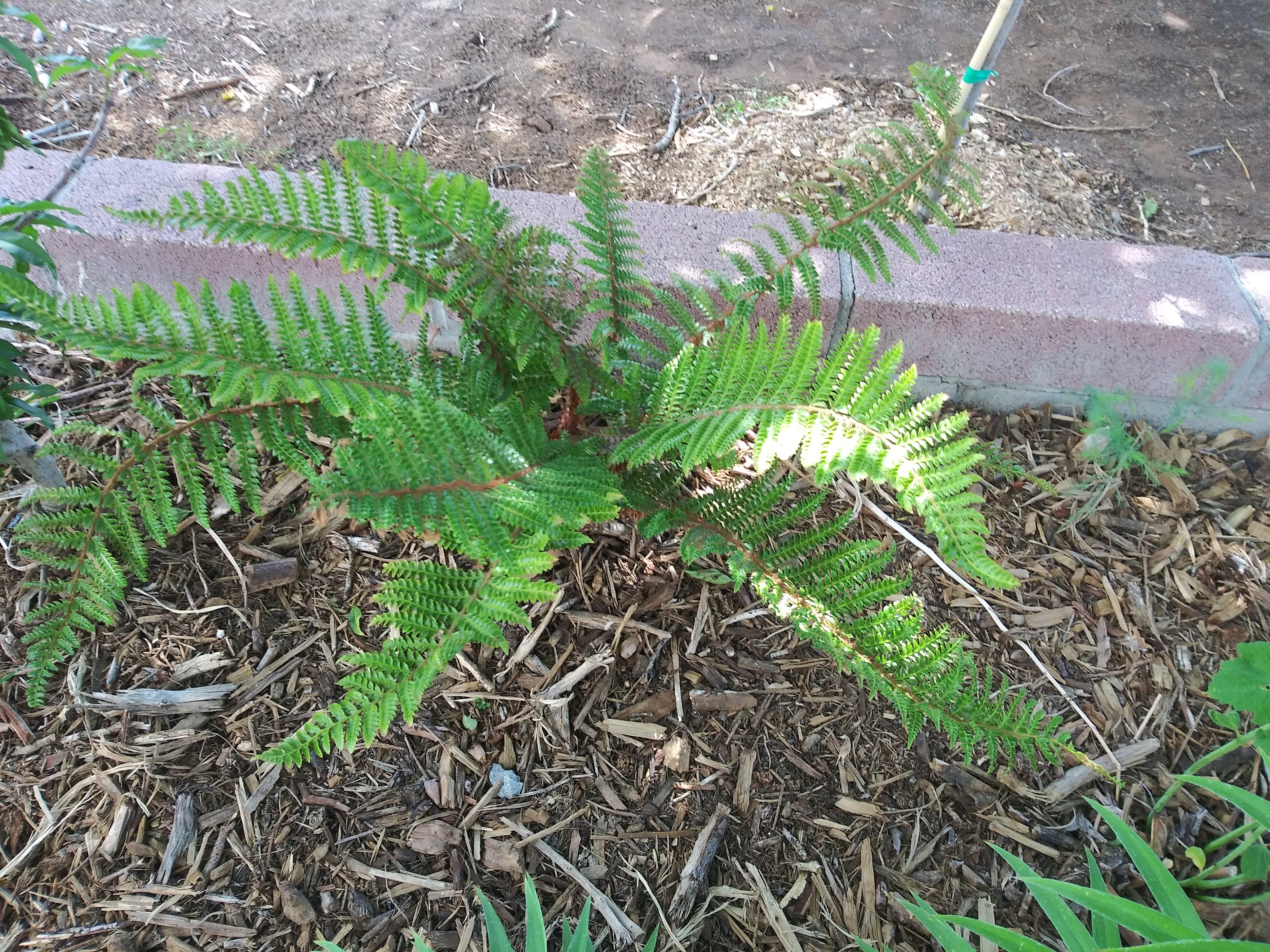
The next ferns I planted were a western sword fern (Polystichum munitum) and a holly fern (Cyrtomium falcatum). Western sword fern is also known as sword holly fern, giant holly fern, Christmas fern, Pineland sword fern, and Chamisso’s shield fern. It is native along the Pacific Coast from southeast Alaska south to central California with some disjunct populations in the northwestern states. It is found in moist forests but it can also take somewhat dry conditions. The large, erect leaves grow up to 4.5 feet long. Western sword fern is hardy in USDA Hardiness Zones 5 to 9.

While the rest of the ferns I planted have a traditional fern look about them, the holly fern looks quite different. The leaves are serrated with sharp tips, looking similar to holly leaves. Holly fern can grow in deep shade to dappled sun-light. I like the foliage as it reminds of some of the more tropical ferns that I have seen. It can get up to 2 feet high and 3 feet wide. It is also known as the Japanese holly fern. Holly fern is hardy in USDA Hardiness Zones 6 to 10. It is evergreen in mild climates. I’ll be interested to see what it does in my Zone 7 garden.

This spring, I bought a bag with two Tennessee ostrich fern (Homalosorus pycnocarpos, syn. Diplazium pycnocarpon), also called Tennessee glade fern, from Walmart. The roots were in a plastic bag and very dry. They looked dead. I planted them in potting soil in a one gallon container. I waited and waited and nothing. It took almost two months but finally one sprouted. After growing it for a while and I thought it was big enough, I planted it outside. In a few weeks, the other root finally emerged. They have been outside for about two months now and while still small they are growing. Tennessee ostrich fern is native to the east coast of North America from southern Canada to the Gulf of México. Tennessee ostrich fern is a tall plant with featherlike fronds and spreads by creeping rhizomes that form large colonies. The fronds can reach up to 3 feet long and form clumps up to a foot and a half wide per plant. They seem to be slow growing but maybe it takes them time to get established. Reportedly, it can withstand some dry conditions once it is established. Tennessee ostrich fern is hardy in USDA Hardiness Zones 3 to 8.
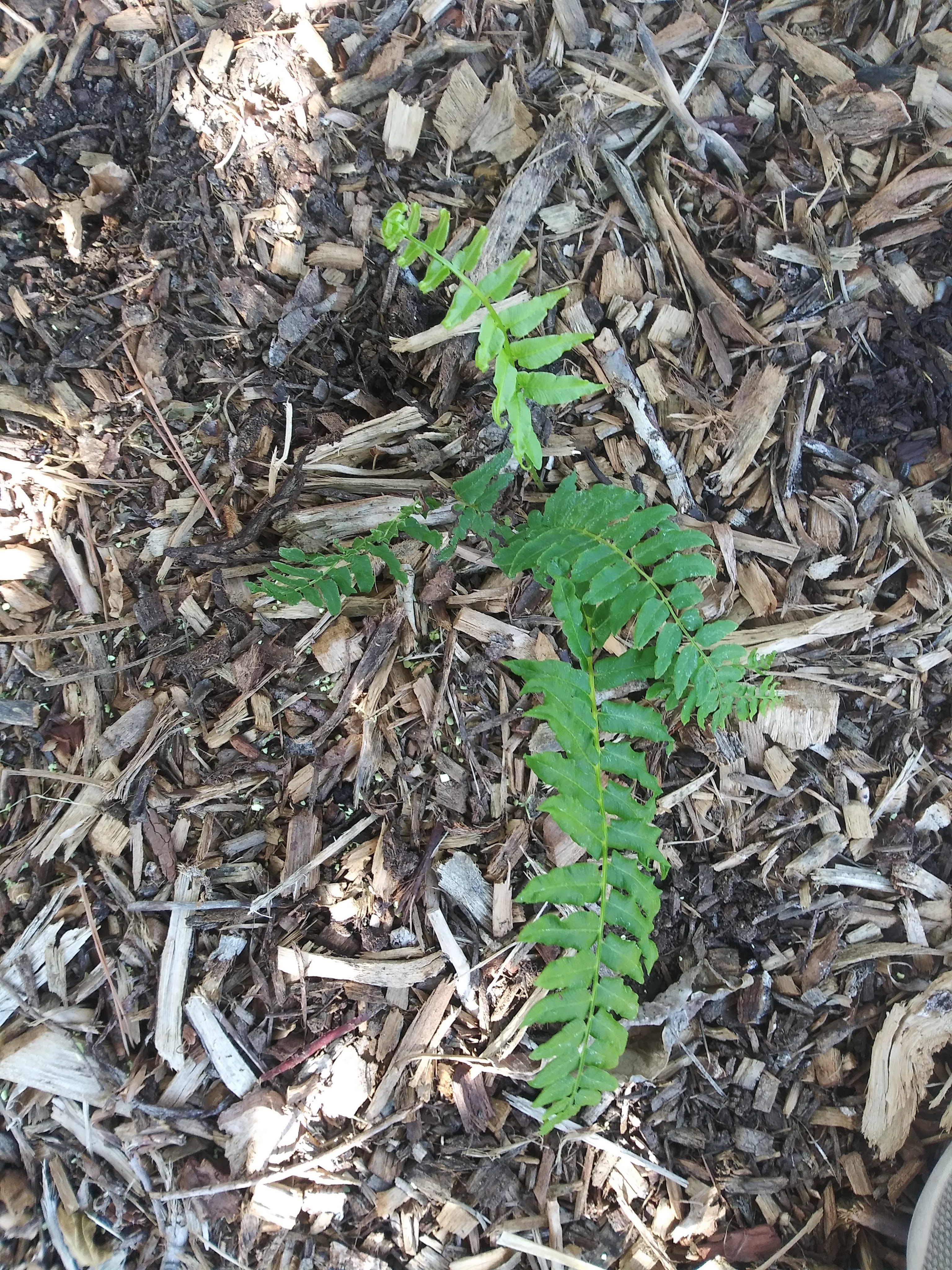
The next fern I purchased is the southern wood fern (Dryopteris ludoviciana). It is native to woodland areas from North Carolina to Florida and west to Texas. I planted it this spring and it has been growing slowly but looks very healthy. It has light green, upright fronds that spread by rhizomes to form dense colonies in wet or dry shade. The fronds grow up to 4 feet long and the plants up to 3 feet wide. Southern wood fern is evergreen in mild climates and deciduous in cooler climates. Southern wood fern is hardy in USDA Hardiness Zones 6 to 10.

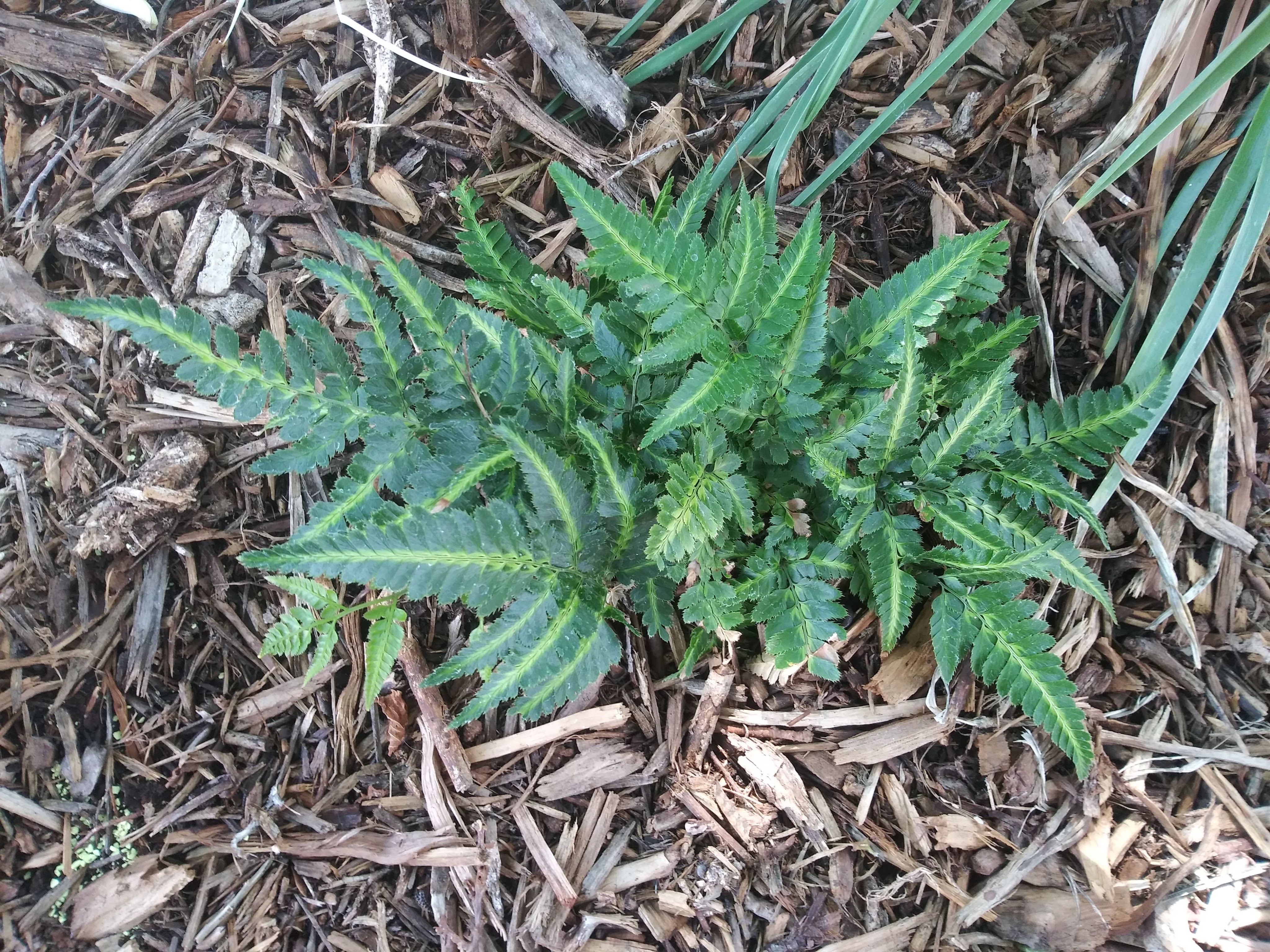
Last, but certainly not least is the Indian holly fern (Arachniodes simplicior ‘Variegata’). I fell in love with this fern at first sight at a local store. It was different from any fern I had seen before. The bright, green fronds have a gold stripe down the midrib of each leaflet. It’s unusual to see other colors besides green in ferns. As with other ferns, Indian holly fern spreads by creeping rhizomes. Monrovia (nursery) calls it, “An excellent fern for woodland colonies and subtropical compositions.” Since I’m into tropical style gardening in a subtropical climate, this fern looks just perfect. Indian holly fern grows to a height of one and a half feet and up 3 feet wide. It is native to India, China, and Japan. Indian holly fern is hardy in USDA Hardiness Zones 7 to 10.
Despite the heat earlier, the ferns all seem to be doing well. They are growing and show no signs of stress. My biggest concern is our soil and city water, both of which are alkaline. I do top dress the beds with horticultural sulfur and cover it with a mulch of wood chips, both of which help to increase the acidity of the soil. The biggest factor that is helping to grow them is the shade from the trees as mentioned before.
I will be observing the different species throughout the growing season and next winter to see which of the ferns survive in our desert climate. Ferns really add that extra touch to a tropical style garden.


 Ted’s Universe: Travel, Art, Nature